ABCs of ISLAM Fatih Guvenen ABCs of ISLAM Fatih Guvenen

La Luna: A “Bite-Size” Lunar Miracle

I was pondering a passage in the Qur’ān about the moon —“al-Qamar” in Arabic — and wondered if the word had any other meanings or metaphorical usage. When I checked the Quranic Arabic Corpus‍ ‍page, I saw that it lists a total of 27 occurrencesof al-Qamar in the Qur’an.

Twenty-seven?” I thought to myself. “That’s only a few days shorter than the length of the lunar month.”

You see, this possible association — between 27 occurrences and the 29.5-days-long lunar month — popped up so naturally in my mind because when you read the Qur’an since your childhood, it is impossible not to become overpowered by its never-ending wonders and miracles that greet you seemingly every time you open its pages.

Yes, miracles… some of which are so profound and comprehensive that it would take volumes to show them in all their glory; others that are “bite-size,” so to speak — delightful wonders that can potentially be noticed by anyone who reads the Qur’an with an open mind and a sincere heart, and it increases their faith and warms their heart.

So, I had this nagging feeling — because the Qur’an never has a near-miss. Anytime it dangles a “marvel” or a “sign” in front of us that looks close-but-not-exact, you can be sure that there is a twist that we missed. And when we finally figure it out, we realize that the connection is even more perfect and beautiful than we had initially suspected.

As I was pondering these, I remembered a verse that mentions the “new moon.” Because there is a separate word for “crescent” in Arabic — al-Hilāl (الهلال) — this verse was not in the list for al-Qamar I had just looked up.

It turns out, the verse I had in mind was the singular appearance of al-Hilāl in the Qur’an (Q2:189):

I was pondering a passage in the Qur’ān about the moon—“al-Qamar” in Arabic—and wondered if the word had any other meanings or metaphorical usage. When I checked the Quranic Arabic Corpus‍ ‍page, I saw that it lists a total of 27 occurrences of al-Qamar in the Qur’an.

Twenty-seven?” I thought to myself. “That’s only a few days shorter than the length of the lunar month.”

You see, this possible association — between 27 occurrences and the 29.5-days-long lunar month — popped up so naturally in my mind because when you read the Qur’an since your childhood, it is impossible not to become overpowered by its never-ending wonders and miracles that greet you seemingly every time you open its pages.

Yes, miracles… some of which are so profound and comprehensive that it would take volumes to show them in all their glory; others that are “bite-size,” so to speak — delightful wonders that can potentially be noticed by anyone who reads the Qur’an with an open mind and a sincere heart, and it increases their faith and warms their heart.

So, I had this nagging feeling — because the Qur’an never has a near-miss. Anytime it dangles a marvel or a sign in front of us that looks close-but-not-exact, you can be sure that there is a twist that we missed. And when we finally figure it out, we realize that the connection is even more perfect and beautiful than we had initially suspected.

As I was pondering these, I remembered a verse that mentions the “new moon.” Because there is a separate word for “crescent” in Arabic — al-Hilāl (الهلال) — this verse was not in the list for al-Qamar I had just looked up.

It turns out, the verse I had in mind was the singular appearance of al-Hilāl in the Qur’an (Q2:189):

…يَسْـَٔلُونَكَ عَنِ ٱلْأَهِلَّةِ  قُلْ هِىَ مَوَٰقِيتُ لِلنَّاسِ وَٱلْحَجِّ

They ask you ˹O Prophet˺ about (the phases of) the crescent moons. Say, “They are a means for people to determine time and pilgrimage…


Notice that the verse actually mentions al-Hilāl in plural form, “the crescent moons,” to refer to the gradual growth of the new moon in the days after its first appearance. We will return to this detail in a moment.

This verse brought the total mentions of the moon to 28.

This discussion about the new moon made me think of the “full moon,” but I didn’t remember it being mentioned in the Qur’an. Then my loyal friend chatGPT reminded me that the Arabic word for the full moon, “Badr,” is also the name of the place (between Mecca and Madina) where the most famous battle of the Islamic history was fought — the Battle of Badr. And this battle is mentioned by name in the Quran (Q3:123):

وَلَقَدْ نَصَرَكُمُ ٱللَّهُ بِبَدْرٍ وَأَنتُمْ أَذِلَّةٌ ۖ  فَٱتَّقُوا۟ ٱللَّهَ لَعَلَّكُمْ تَشْكُرُونَ

Indeed, Allah made you victorious at Badr when you were ˹vastly˺ outnumbered. So be mindful of Allah, perhaps you will be grateful.

What is perhaps more surprising is that although this battle is recounted several times in the Qur’an, the name Badr occurs only once — just as the full moon appears in one single night!

(Those with curios minds might wonder: what day of the lunar month did the Battle of Badr took place? Because this battle is so famous and because Muslims used a lunar calendar at the time, we do now the exact date: on the 17th Day of the lunar month of Ramadan — that is, only two days after the full moon, when the sky is still almost as bright!)

This verse brought the total mentions to 29.

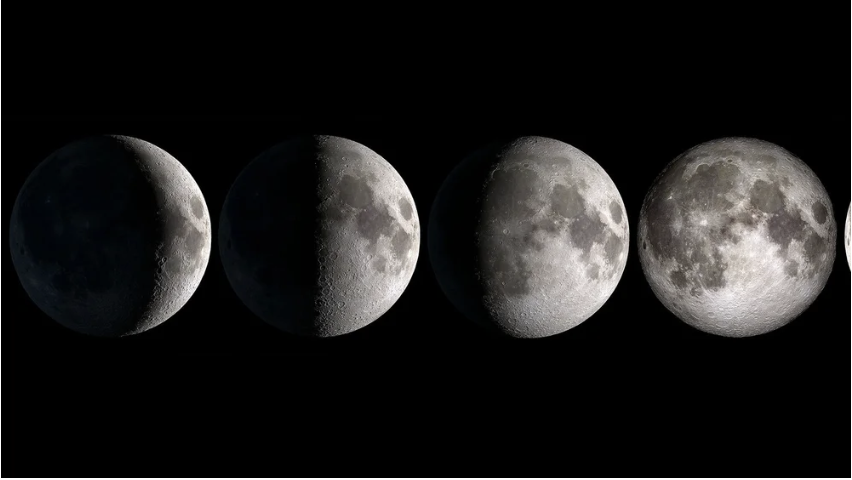
This of course makes us wonder — how about the “old moon,” or the last day of the waning Gibbous?

Lo and behold! Here is verse 39 of Sūrat Yasin (Q36:39):

وَ ٱلْقَمَرَ قَدَّرْنَـٰهُ مَنَازِلَ حَتَّىٰ عَادَ كَٱلْعُرْجُونِ ٱلْقَدِيمِ

As for the moon, We have ordained ˹precise˺ phases for it, until it ends up ˹looking˺ like an old, curved palm stalk.


The verse begins with al-Qamar and describes how it gradually shrinks until it becomes a curved branch of a date tree — giving a poetic description of how the moon shrinks into waning Gibbous, ending up as the “old moon”. This also happens to be the very last word of the verse, just as the old moon is the last night of the cycle.  

And this brings thetotal mentions to 30and with a very elegant twist: It gives a precise account of twenty-seven (regular) moons, one new moon, one full moon, and one old moon. Not one of them is too few or too many — each exactly as it is supposed to be! 

And as if to say to us — “I know some of you are thinking that the moon cycle is not always 30 days, sometimes it is 29 and sometimes 30” — the Qur’an mentions 29 of them with precise Arabic words for the moon — al-Qamar, al-Hilāl, and al-Badr — and the 30th one with a metaphorical description of the old moon rather than a specific name, as if to leave a little doubt whether the 30th one has really been mentioned or not. (Perhaps to echo the same hesitation Muslims around the world experience every Ramadan — about whether the month ended on the 29th day or there is a 30th one.)  Once again, the Qur’an shows us it is always one step ahead of us.

This discussion brings up another thought:

How are the mentions of these three special names of the moon ordered in the Qur’an?

The table below shows the list of mentions in order:

The Ordering of Moon Phases

When we look closely at each occurrence of al-Qamar in this table, we notice some remarkable patterns that precisely match astronomical facts about the phases of the moon:

  1. The very first mention of the moon in the Qur’an (Q2:189) is of the new moon. Not only does the new moon appear before the other two phases but also before any of the other 29 mentions of the moon in the Qur’an — just as the new moon is the beginning of the lunar cycle.

  2. The full moon appears next (Q3:123), right after the new moon, and the old moon appears last of the three and comes much later in (Q36:39). Which means the three unique phases of the moon appear in the Qur’an according to their astronomical order.

  3. This made me curious about the very late appearance of the old moon (in Surah 36), so I counted how many times the regular moon (al-Qamar) appears between the full moon and the old moon in the list. The answer is 15 — or exactly half the lunar month!

  4. Perhaps, to make the answer even more exact (for those nitpickers like me), the 15th appearance of al-Qamar occurs in the same verse (Q36:39) as the old moon, so that there are 14 verses separating the full moon (Q3:123) from the old moon (Q36:39), as is the case when the lunar month lasts 29 days.

  5. Speaking of 29-day months, notice that al-Qamar occurs twice in verse Q41:37, meaning that we see “the moon” in 26 verses, not 27. Adding the three occurrences of unique phase names to these 26 gives us 29 verses in which different phases of the moon is mentioned. This seems to be another nod to the fact that the lunar month is sometimes 29 days and sometimes 30, averaging 29.5 days. And when it is 29, the three special phases of new, full, and old, are always intact, with one fewer night of the generic moon. Just as in this alternative calculation.

Summary

Wow… What started as a small curiosity, from noticing the 27 occurrences of al-Qamar in the Qur’an, revealed one surprise after another until we were presented with a remarkable order within the Qur’an.

Let’s summarize what we found:

  1. The Qur’an mentions the moon 30 times — 27 of which are the generic name for the moon and three of them spell out the new moon, the full moon, and the old moon.

  2. The name of the full moon — Badr — is also the name of the most famous Battle in the history of Islam, which is recounted at length in the Qur’an (with an entire chapter — Sūrah al-Anfal — almost exclusively discussing it), yet thename occurs only once — just as the full moon does.

  3. The new, full, and old moon appear in the Qur’an exactly according to their astronomical order.

  4. The new moon is mentioned in Chapter 2 and is the first of the 30 mentions of the moon names.

  5. There is exactly 15 mentions of “the moon” between the mentions of the “full moon” and “old moon” and 14 verses in which these occur.

  6. Al-Qamar occurs twice in one verse, so the moon appears in 26 verses, for a total of 29 verses, with distinct moon names. Perhaps a nod to the 29-day lunar months, which is half of the year.

When we consider these six facts collectively, it is clear that the chances of all of these occurring at once by chance is practically zero.

If someone beset by excessive doubt is tempted to suggest that one can carefully craft these features into a book, since these astronomical facts were known in ancient times, that is indeed true. However, they will be sorely disappointed to learn that this is but one of thousands of such miracles  in the Qur’an (especially in the precision of its counts, orderings, and broad structure), which collectively makes any kind of tampering way beyond human capacity. Inshā’Allah, we will share more of these bite-sized miracles about the Qur’anic order and precision in upcoming articles. 

Final Thoughts

‍The Qur’an is an endless ocean of knowledge and wisdom as it states itself (Q18:110), so as much as I find these signs of meticulous and masterful design in the Qur'an delightful and increasing our faith in it every day, I must also admit that this article probably only scratched the surface of the secrets about the mentions of the moon in the Qur’an.

Let me give a few examples for further investigation:

  1. What can the contents of the 27 verses (in which al-Qamar appears) tell us? How are they organized? Are they in any way linked to each other? Furthermore, in 20of these 27 verses (and of 30 total), the moon is mentioned with the Sun, the others are not (Corpus link). Anything to learn from these? 

  2. Why does the mentions of the “new moon” and “full moon” appear back-to-back (in chapters 2 and 3), and the “generic” moon is not mentioned until chapter 6? Since there are 30 occurrences of the moon in the Qur’an, and the full moon and old moon are separated by 14 or 15 moons as we saw above, couldn’t the “full moon” appear in 15th place in the table and the old moon in the 30th place? A Qur’an that gets the long list of astronomical facts described above precisely right could surely have gotten this right as well — if it wanted to. So, what is it trying to tell us by choosing this slightly different arrangement in this particular case?

I don’t know the answer to these questions at this point, but I have absolutely no doubt that there is a really compelling wisdom in the way it is currently arranged. I can say this with utmost confidence because I have never been able to find a single case where any human can think ahead — or even anywhere close behind! — of the Qur’an.

If any thought occurs to us, the Creator who sent us the Qur’an has always known about it. He only wants us to ponder some more and be ready to be awed when we find the answer. 


Read More
Fatih Guvenen Fatih Guvenen

Wisdom Lessons from Air and Wind

During an intellectual meditative journey into the word “Hû” — هُوَ in لَا إِلٰهَ إِلَّا هُوَ (There is no god by He) and قُلْ هُوَ اللّٰهُ (Say: He is Allah) and its meanings for the physical aspects of creation, I was contemplating the page of “air” when an exquisitely subtle point of tawḥīd (Divine Oneness) instantly manifested itself:

Indeed, just as a handful of soil that serves as a pot for a hundred flowers in succession, if attributed to nature and causes, would necessitate either that this small pot contains, on a miniature scale, a hundred — or perhaps as many as the flowers — invisible machines and factories; or that each particle of that tiny piece of soil possesses the knowledge to form all those different flowers, with their distinct properties and life-sustaining mechanisms, possessing endless knowledge and infinite power like a deity.

Likewise, each piece of air and wind, which serves as a throne for divine command and will, would require, within each fragment of wind, within each breath, within the tiny amount of air that forms the word “Hû” (هُوَ), the presence of miniature switchboards, receivers, and transmitters of all the telephones, telegraphs, radios, televisions, and all other types of communications that take place across the world, and be able to perform these endless tasks simultaneously and instantaneously.

(This article is a translation of “Hüve Nüktesi” by Badiuzzamān Said Nursî (r.a))

During an intellectual meditative journey, I was drawn into contemplating the Divine Secrets behind the curious usage of the Arabic pronoun “” (هُوَ) in reference to God in two of the most crucial phrases in Islam:

  • In the proclamation “لَا إِلٰهَ إِلَّا هُوَ”, meaning “There is no god but He”), and

  • In the Quranic verse “قُلْ هُوَ اللّٰهُ”, meaning “Say: ‘He is Allah’”.

With these in mind I was reflecting on the physical creation—and specifically, on the particles of “air”— when the usage of هُوَ in these phrases revealed an exquisitely subtle point about tawḥīd—the Oneness of the Divine Creator.

I witnessed how the path of faith is of boundless ease, to the degree of necessity, while the path of associating partners with God (shirk) and misguidance (dalālah) contains infinite difficulties and thousands of impossibilities. I will explain this vast and long point with an extremely brief indication:

Indeed, just as a handful of soil that serves as a pot for a hundred flowers in succession, if attributed to nature and causes, would necessitate either that this small pot contains, on a miniature scale, a hundred — or perhaps as many as the flowers — invisible machines and factories; or that each particle of that tiny piece of soil possesses the knowledge to form all those different flowers, with their distinct properties and life-sustaining mechanisms, possessing endless knowledge and infinite power like a deity.

Likewise, each piece of air and wind, which serves as a throne for divine command and will, would require, within each fragment of wind, within each breath, within the tiny amount of air that forms the word “Hû” (هُوَ), the presence of miniature switchboards, receivers, and transmitters of all the telephones, telegraphs, radios, televisions, and all other types of communications that take place across the world, and be able to perform these endless tasks simultaneously and instantaneously.

Otherwise, every single particle of air in that “Hû”, and indeed each particle of the very element of air, would need to possess as many spiritual personalities and capabilities as all the telephone operators, radio, and TV broadcasters combined, know all their languages, to simultaneously transmit and broadcast them to nearby particles. Because, in reality, we observe precisely this phenomenon, we know that this capacity exists in every single particle of air.

Thus, in the path of those who deny faith and follow the doctrines of naturalism and materialism, there is not just one impossibility, but perhaps as many impossibilities and profound difficulties as the number of particles.

If entrusted to the Majestic Creator, the entire mass of air, with all its particles, becomes His obedient soldier. With the ease of a single particle carrying out a single orderly task, it performs endless critical duties, by His permission and power, through its affiliation with and reliance upon its Creator, by the manifestation of His power, and at once, with the speed of lightning, and as effortlessly as the pronunciation of “Hû” or the gentle wavelike motion of air. 

In other words, the air becomes a page upon which the Pen of Divine Power writes countless wondrous and orderly inscriptions. Its particles become the tips of that pen, and their functions become the dots of the Pen of Divine Decree. The entire system operates with the ease of a single particle’s movement.

Thus, during my journey inspired by the movement of thought in لَا إِلٰهَ إِلَّا هُوَ and قُلْ هُوَ اللّٰهُ, while I was observing the realm of air and studying the page of that element, I saw this concise truth with utmost clarity and detail and witnessed it with absolute certainty (ʿayn al-yaqīn).

Just as the utterance of “Hû” and its airborne transmission constitutes a brilliant proof of Divine Oneness (Wahidiyyat), there is an extremely luminous manifestation of Divine Uniqueness (Ahadiyyat) in its meaning and indication, and a very strong proof of Divine Unity (tawḥīd); and it also reveals that “Hû” contains an explicit indication of which Being the unrestricted and vague pronoun “Hû refers to (for example, in There is no god but He).  It is for this reason that both the miraculous Quran and the people of remembrance (ahl al-dhikr) frequently repeat this sacred word in the station of Divine Unity. I came to know this with certainty (ʿilm al-yaqīn).

Yes, for example, while two or three points placed on a white paper begin to mix up, and a person becomes confused when trying to do many different tasks simultaneously, and a small creature is crushed under too many loads, and a tongue and an ear would become confused and lose their order when multiple words enter and exit at the same time, I witnessed with absolute certainty (ʿayn al-yaqīn) that within the realm of air — through which I traveled intellectually with the key and compass of Hû — each piece, even each particle of air, contains thousands of different points, letters, and words without getting mixed up and without disrupting their order.

Despite performing countless distinct functions, these particles never err or become bewildered. Even when burdened with immense responsibilities, they display no weakness, delay nothing, and maintain perfect order. Thousands of distinct words, in different styles and meanings, enter tiny ears and exit delicate tongues in complete harmony, without confusion or corruption.

And while carrying out these astounding tasks, each particle moves freely and effortlessly, as if chanting لَا إِلٰهَ إِلَّا هُوَ  and  قُلْ هُوَاللّٰهُ أَحَدٌ. I witnessed this in the midst of storms, lightning, thunder, and turbulent air currents — even under such violent conditions, the particles of air never lost their order or function, nor did any one task hinder another. I witnessed this with absolute certainty (ʿayn al-yaqīn).

Thus, if air were not an instrument of divine command, then each particle and fragment of air would have to possess limitless wisdom, infinite knowledge, boundless will, and absolute power over all particles—an impossibility as absurd as the number of particles themselves. No devil could even entertain such an idea.

Therefore, with absolute certainty, at every level of knowledge (ḥaqq al-yaqīn, ʿayn al-yaqīn, and ʿilm al-yaqīn), this page of air is none other than the changing page of the Divine Pen of Power and Decree, continuously inscribed and erased as a dynamic register in the mutable realm, akin to the Preserved Tablet’s (Lawḥ al-Maḥfūẓ) counterpart in the realm of fluctuation (Lawḥ al-Maḥw wa’l-Ithbāt).

Thus, the element of air, through its mere function of transmitting sound, displays the manifestation of Divine Oneness and reveals the endless impossibilities of falsehood. Furthermore, beyond transmitting sound, one of its many essential tasks is the transmission of electricity, attraction, repulsion, light, and other subtle forces — carried out with absolute precision and harmony. While fulfilling its task of sound transmission, it simultaneously supplies plants and animals with the necessary components for respiration and pollination, sustaining life with perfect order.

This conclusively proves that air is a throne of divine command and will. It demonstrates with absolute certainty that blind chance, deaf nature, chaotic purposeless causes, and lifeless, powerless, ignorant matter have no role whatsoever in the writing and execution of the script upon this page of air. I became fully convinced, with the certainty of direct perception (ʿayn al-yaqīn), that every single fragment of air proclaims:  لَا إِلٰهَ إِلَّا هُوَ  and  قُلْ هُوَاللّٰهُ أَحَدٌ.

Moreover, just as the key of “Hû” unveiled the wonders of the physical realm within the air, I understood that “Hû” also holds a key to the Realm of Similitudes (ʿālam al-mithāl) and the Realm of Meanings (ʿālam al-maʿ). I saw that the realm of imagery holds countless photographs, and each image simultaneously records innumerable earthly events without confusion.  It functions as a vast celestial cinema machine, more expansive than thousands of worlds, for showing the inhabitants of Paradise their worldly adventures and old memories through scenes, and the permanent fruits of their temporary states, positions, and passing lives.

Both the Preserved Tablet (Lawḥ al-Maḥfūẓ) and the Realm of Similitudes have two proofs, two tiny examples, or two points in the human head: memory and imagination.

Although as tiny as a lentil, these faculties record vast amounts of information, equivalent to a large library, with flawless precision. This irrefutably proves that the much greater counterparts of these faculties — the Realm of Similitudes, the elements of air and water, especially the water of seminal fluid, and the element of soil — are written with even greater wisdom and will, and with the pen of destiny and power.

Thus, random chance, blind force, deaf nature, or lifeless, aimless causes can't interfere with or have any role in this cosmic inscription; indeed, such a notion is a hundred times impossible. With absolute certainty (ʿilm al-yaqīn), it became known that these are the pages of Divine Wisdom and Decree — the manifestation of the All-Wise Creator’s Pen of Power and Decree.

Translated by Fatih Guvenen, with able assistance by Claude.ai and ChatGPT (February 1, 2025).

Read More
ABCs of ISLAM Fatih Guvenen ABCs of ISLAM Fatih Guvenen

ABC’s of ISLAM: Introduction

The ABCs of Islam is a series of short, accessible articles introducing the basic tenets of Islam — written for the educated and curious reader who is looking for reliable, honest, and human answers.

As you can imagine, writing these articles takes considerable time. So why am I doing it?

The honest answer is: my friends made me.

Over three decades ago I left my native Turkey to do a PhD in Economics in the United States. The friends I made there knew little about Turkey or Islam — just as I knew little about Thailand or Argentina, or about Buddhism or Catholicism. We were curious about each other in the way that people who genuinely like each other tend to be.

But they were also hearing about Islam in passing — usually in the context of a war, an immigration crisis, or a terror attack by people who claimed to speak for Muslims. The picture was rarely flattering, and rarely complete.

Sometimes, thankfully, their curiosity came from warmer places:

Why was I not eating — or drinking — anything during the day in Ramadan?Why was that new student in class covering her hair?Why did I believe in God at all?

These are not easy questions to ask someone. But I never felt awkward or defensive about them — perhaps because I grew up in a home where no question was too uncomfortable. My father, a scholar of Islam and a devout Muslim, always responded to my questions with patience and thought. I tried to do the same.

On the contrary, I felt I had found kindred spirits. My friends felt comfortable asking me things they were afraid to ask others — for fear of giving offence, or of seeming ignorant. And I genuinely loved thinking through the answers with them.

Over the following decades I heard the same questions asked again and again — by different friends, in different cities, at different stages of life. It became clear that there must be many others out there wondering the same things.

Which is how this series began.

Here is a selection of the topics this series plans to cover:

On God: Who is God according to Islam? What does He want from us — and what does He promise in return?

On the Quran: What is the Quran? Why do some call it a miraculous book — and why do others find it hard to understand? Who wrote it, what does it contain, and how does it differ from the Bible?

On Muhammad: Who was Muhammad (pbuh)? Where and when did he live? What were his main teachings and what legacy did he leave? Was he a warlord? Who did he marry, and why?

On Jesus Christ: What does Islam teach about Jesus? Is he the Messiah? What about the virgin birth?

On women: What is Islam's view of women, and how do women's rights in Islam compare to other traditions?

On Islam and the modern world: Is Islam compatible with modern science? With democracy? With freedom of conscience?

On other faiths: What do Muslims believe about Christians, Jews, Buddhists, Hindus, agnostics, and atheists?

On violence and extremism: What is Jihad — really? Why does Islam so often appear in the context of war and terrorism, and what does that context leave out?

Obviously, this is a short list, and there are many other pressing questions that other readers might want to know about.

So, feel free to submit your questions for future articles using the message form below.

The ABCs of Islam is a series of short, accessible articles introducing the basic tenets of Islam — written for the educated and curious reader who is looking for reliable, honest, and human answers.

As you can imagine, writing these articles takes considerable time. So why am I doing it?

The honest answer is: my friends made me.

Over three decades ago I left my native Turkey to do a PhD in Economics in the United States. The friends I made there knew little about Turkey or Islam — just as I knew little about Thailand or Argentina, or about Buddhism or Catholicism. We were curious about each other in the way that people who genuinely like each other tend to be.

But they were also hearing about Islam in passing — usually in the context of a war, an immigration crisis, or a terror attack by people who claimed to speak for Muslims. The picture was rarely flattering, and rarely complete.

Sometimes, thankfully, their curiosity came from warmer places:

Why was I not eating — or drinking — anything during the day in Ramadan?Why was that new student in class covering her hair?Why did I believe in God at all?

These are not easy questions to ask someone. But I never felt awkward or defensive about them — perhaps because I grew up in a home where no question was too uncomfortable. My father, a scholar of Islam and a devout Muslim, always responded to my questions with patience and thought. I tried to do the same.

On the contrary, I felt I had found kindred spirits. My friends felt comfortable asking me things they were afraid to ask others — for fear of giving offence, or of seeming ignorant. And I genuinely loved thinking through the answers with them.

Over the following decades I heard the same questions asked again and again — by different friends, in different cities, at different stages of life. It became clear that there must be many others out there wondering the same things.

Which is how this series began.


Here is a selection of the topics this series plans to cover:

On God: Who is God according to Islam? What does He want from us — and what does He promise in return?

On the Quran: What is the Quran? Why do some call it a miraculous book — and why do others find it hard to understand? Who wrote it, what does it contain, and how does it differ from the Bible?

On Muhammad: Who was Muhammad (pbuh)? Where and when did he live? What were his main teachings and what legacy did he leave? Was he a warlord? Who did he marry, and why?

On Jesus Christ: What does Islam teach about Jesus? Is he the Messiah? What about the virgin birth?

On women: What is Islam's view of women, and how do women's rights in Islam compare to other traditions?

On Islam and the modern world: Is Islam compatible with modern science? With democracy? With freedom of conscience?

On other faiths: What do Muslims believe about Christians, Jews, Buddhists, Hindus, agnostics, and atheists?

On violence and extremism: What is Jihad — really? Why does Islam so often appear in the context of war and terrorism, and what does that context leave out?


Obviously, this is a short list, and there are many other pressing questions that other readers might want to know about.

So, feel free to submit your questions for future articles using the message form below.

Read More
ABCs of ISLAM Fatih Guvenen ABCs of ISLAM Fatih Guvenen

What is the First Sentence of the Quran?

The Quran is the Divine Book of Islam, and Muslims believe that it is the Word of God, unaltered. And Prophet Muhammad (peace be upon him) said it will remain “his greatest miracle until the end of time.”

Clearly, these are bold claims, and a non-Muslim has every right to be skeptical about their truth. I will discuss these claims and the evidence put forward in detail in future posts.

For now though, what matters is that regardless of whether you believe this or not, these statements reflect how Muslims view the Quran.So, if you want to know what Islam is — as understood by Muslims — you start with the Quran.

First: A unique feature of the Quran is its hierarchical structure: that all the (600-page!) Quran is summarized in its first Chapter (1/3-page long!), and that the first chapter is summarized in the first Sentence.

(You may notice that this is precisely the format of modern scientific articles: “Article summarized in Introduction summarized in Abstract”, which I find pretty remarkable for a book that goes back 1500 years.)

So, what does that first sentence say? Here it is:

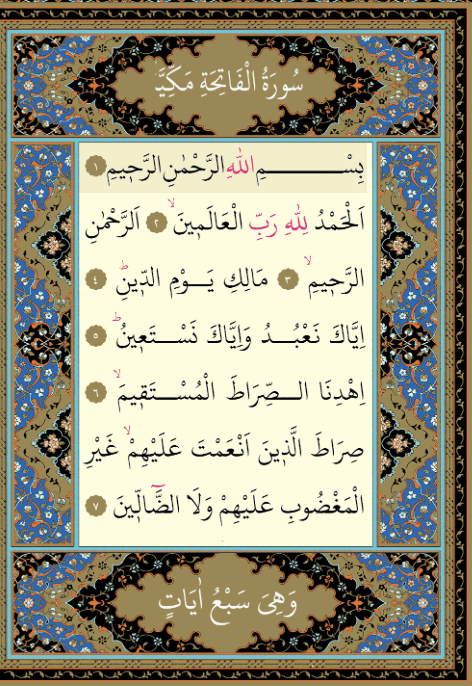
The first page of the Quran, Islam’s holy book.


The Quran is the Divine Book of Islam, and Muslims believe that it is the Word of God, unaltered. And Prophet Muhammad (peace be upon him) said it will remain “his greatest miracle until the end of time.”

Clearly, these are bold claims, and a non-Muslim has every right to be skeptical about their truth. I will discuss these claims and the evidence put forward in detail in future posts.

For now though, what matters is that regardless of whether you believe this or not, these statements reflect how Muslims view the Quran. So, if you want to know what Islam is — as understood by Muslims — you start with the Quran.

First: A unique feature of the Quran is its hierarchical structure: that all the (600-page!) Quran is summarized in its first Chapter (1/3-page long!), and that the first chapter is summarized in the first Sentence.

(You may notice that this is precisely the format of modern scientific articles: “Article summarized in Introduction summarized in Abstract”, which I find pretty remarkable for a book that goes back 1500 years.)

So, what does that first sentence say? Here it is:

In the Name of Allah, the Most Compassionate, the Most Merciful.


Remember: This sentence is meant to be the summary of the Entire Quran!

And it includes two divine names of God, which mean almost the same thing!!

In fact, they are from same root, and they share 3 of their 4 letters:


Important fact: In Islam, God has 99 Divine Names:

The Creator, The Sovereign, The King, The Eternal One, The All Mighty, The Ever Living, The All Sustainer, The Truth, The All Wise, The Omniscient, the Subtle, The First, The Last, the Knower or Unseen, and many others.

Yet, in this first sentence He chose to include two names with very similar meanings — about Compassion and Mercy.

Not the King, nor the Almighty, nor the Omniscient, nor the All Wise, and so on.

Another important fact: The Quran has 114 Chapters. With one exception, every single one starts with this exact same sentence!

One more important fact: Recall that the first chapter of the Quran is a slightly more expanded summary of the entire Quran. That chapter is the topic of the next post, but for now let me mention one relevant point: that chapter is only 7 short sentences that fits in the middle of the page — see the photo at the top. Now, here is the surprise: Do you know what is the 3rd sentence of this very short chapter? Here it is:

“He is the Most Compassionate, the Most Merciful.

It repeats the same two names, verbatim, from the first sentence!

If you think that this repetition is redundant — it’s not! The Quran is an extremely carefully crafted text, which I hope will become clear as we see more examples in future posts. When it repeats something, it is always intentional — like here, in two of the seven sentences — and it is to leave absolutely no doubt that these two names were chosen over a long list of other beautiful divine names.


To Sum Up:

These simple facts tells you more than what reading entire books about Islam will. It tells us that God, or Allah, wants us to know Him first and foremost with His Compassion and Mercy and Love.

When Sufis (spiritual tradition of Islam, represented by Rumi, among others) say that “God created the Universe out of His Love”, they are not exaggerating. That statement is soundly rooted in the essence of Islam.

Compassion and Mercy are at the core of Islam. It permeates the entire Quran, as well as the teachings of Prophet Muhammad, whom Allah named “The Prophet of Mercy to the Entire Universe.

A follow-up lesson: If anyone who purports to be a Muslim acts otherwise, they are betraying the soul and spirit of Islam.

Salam (meaning Peace)


For the curious reader: The meanings of Compassion and Mercy are so similar in English that you might rightly be wondering: what is the difference between Rahman and Rahim in Arabic that are translated as the Most Compassionate and the Most Merciful? They cannot be the same, can they? No, they are not. In fact, there are many crucial differences, some obvious and many subtle, that I plan to write about in the future.

For now, one useful way to think about the difference is that Rahman operates in macro scales, whereas Rahim operates in micro scales. Rahman is more general. Rahim is more personal. For example, Rahman blesses every single creature with life on earth, whether they are saints or murderers, whereas Rahim rewards those who are grateful to Rahman’s blessings with Heaven. You could also see Rahman in the Sun, energizing the entire solar system; Rahim in the Moon, serving as our personal night lamp. Rahman in the rain; Rahim in the soil. Rahman in the creation and expansion of the Universe, Rahim in the sustenance and bounties in our lives. Rahman in men; Rahim in women. In fact, the word for womb in Arabic is Rahim (as well as in Hebrew). Some things to ponder.

Read More