Post 2: Gratitude — The Essence of Islam
In the previous post (“What is the First Sentence of the Quran”), we mentioned that the the first sentence of the Quran was:
In the Name of Allah, the Most Compassionate, the Most Merciful
This declaration is not only the first sentence of the first Chapter but is also the first sentence of every chapter in the Quran, and Muslims are instructed to begin every good action in life by reciting these words. This is to remind us that as humans we are on this Earth by His Grace and His Love, and therefore we must be mindful that every one of our actions reflects the Compassion and Mercy with which God introduces Himself to us.
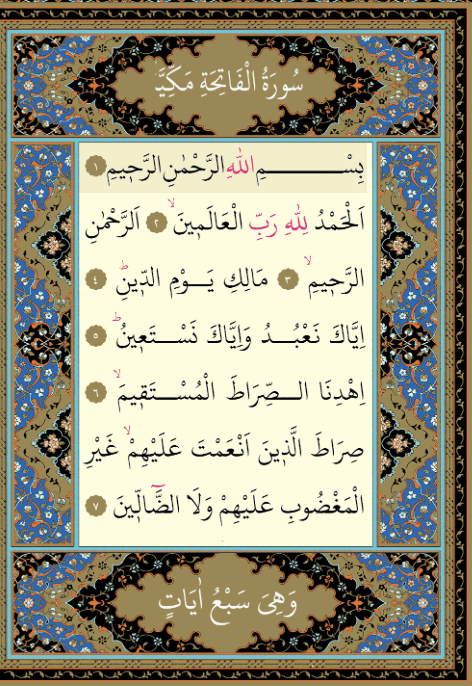
The First Page of the Quran
The first chapter of the Qur’an is named “Al-Fātiha”, which means “The Opener,” because it is meant to open the doors to the entire 600-page Holy Book. As mentioned in the previous post, the entire Qur’an is said to be summarized in this first chapter — which contains only 7 short sentences!
La Luna: A “Bite-Size” Lunar Miracle
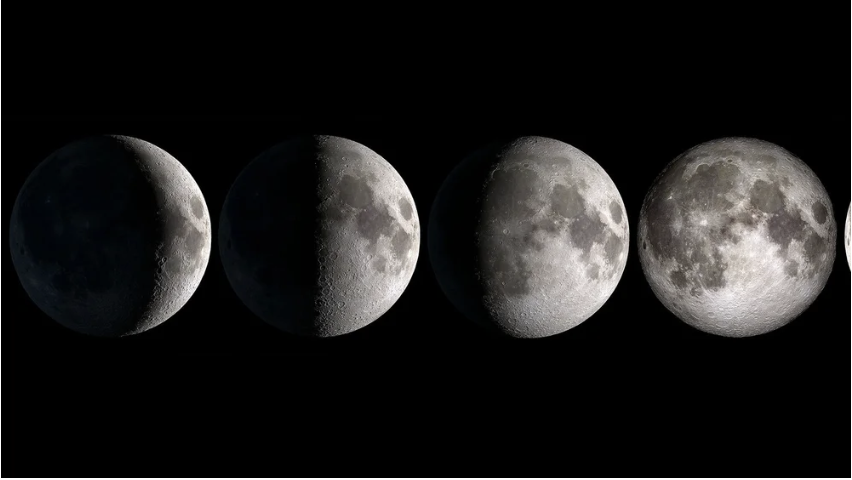
I was pondering a passage in the Qur’ān about the moon —“al-Qamar” in Arabic — and wondered if the word had any other meanings or metaphorical usage. When I checked the Quranic Arabic Corpus page, I saw that it lists a total of 27 occurrencesof al-Qamar in the Qur’an.
“Twenty-seven?” I thought to myself. “That’s only a few days shorter than the length of the lunar month.”
You see, this possible association — between 27 occurrences and the 29.5-days-long lunar month — popped up so naturally in my mind because when you read the Qur’an since your childhood, it is impossible not to become overpowered by its never-ending wonders and miracles that greet you seemingly every time you open its pages.
Yes, miracles… some of which are so profound and comprehensive that it would take volumes to show them in all their glory; others that are “bite-size,” so to speak — delightful wonders that can potentially be noticed by anyone who reads the Qur’an with an open mind and a sincere heart, and it increases their faith and warms their heart.
So, I had this nagging feeling — because the Qur’an never has a near-miss. Anytime it dangles a “marvel” or a “sign” in front of us that looks close-but-not-exact, you can be sure that there is a twist that we missed. And when we finally figure it out, we realize that the connection is even more perfect and beautiful than we had initially suspected.
As I was pondering these, I remembered a verse that mentions the “new moon.” Because there is a separate word for “crescent” in Arabic — al-Hilāl (الهلال) — this verse was not in the list for al-Qamar I had just looked up.
It turns out, the verse I had in mind was the singular appearance of al-Hilāl in the Qur’an (Q2:189):

Elif-Lâm-Mîm: Görsel Bir Tefsir (Turkish)
Kur’ân’da, Bakara dahil 6 surenin ilk ayeti olan Elif-Lâm-Mîm üzerine yazdığım görsel tefsirin en yeni versiyonunu şu link'ten indirebilirsiniz:

What is the First Sentence of the Quran?
The Quran is the Divine Book of Islam, and Muslims believe that it is the Word of God, unaltered. And Prophet Muhammad (peace be upon him) said it will remain “his greatest miracle until the end of time.”
Clearly, these are bold claims, and a non-Muslim has every right to be skeptical about their truth. I will discuss these claims and the evidence put forward in detail in future posts.
For now though, what matters is that regardless of whether you believe this or not, these statements reflect how Muslims view the Quran.So, if you want to know what Islam is — as understood by Muslims — you start with the Quran.
First: A unique feature of the Quran is its hierarchical structure: that all the (600-page!) Quran is summarized in its first Chapter (1/3-page long!), and that the first chapter is summarized in the first Sentence.
(You may notice that this is precisely the format of modern scientific articles: “Article summarized in Introduction summarized in Abstract”, which I find pretty remarkable for a book that goes back 1500 years.)
So, what does that first sentence say? Here it is: